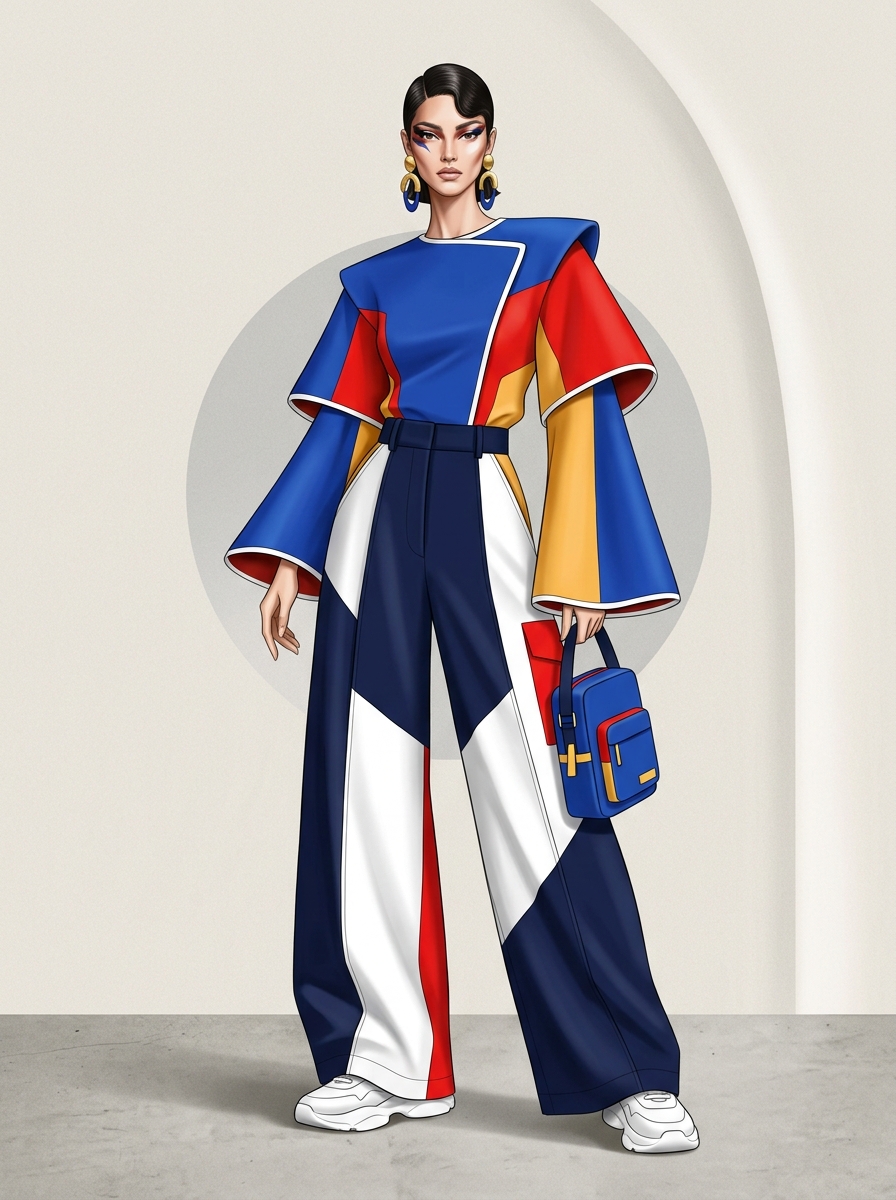
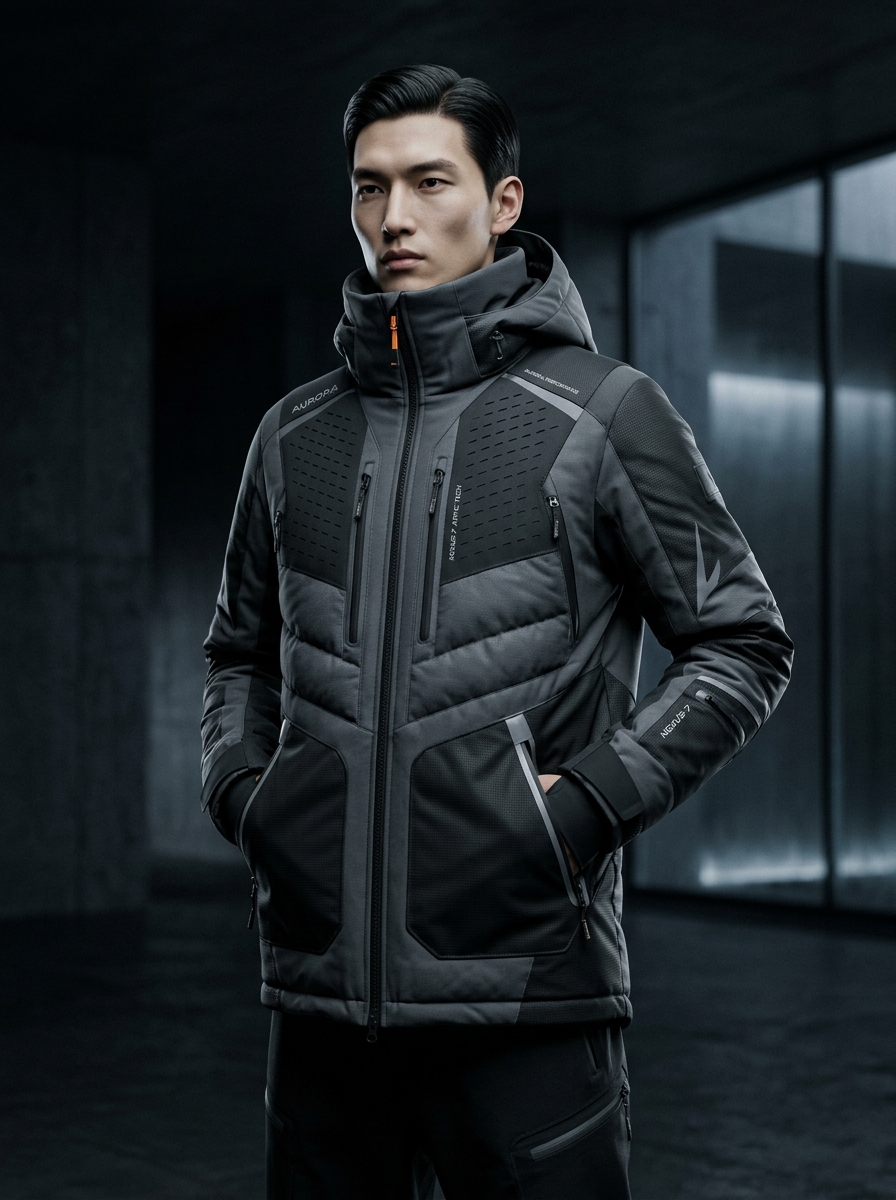
Thiết kế áo jacket
A high-performance technical outerwear design project focused on modular utility, complex hardware integration, and ergonomic fit for active urban environments.
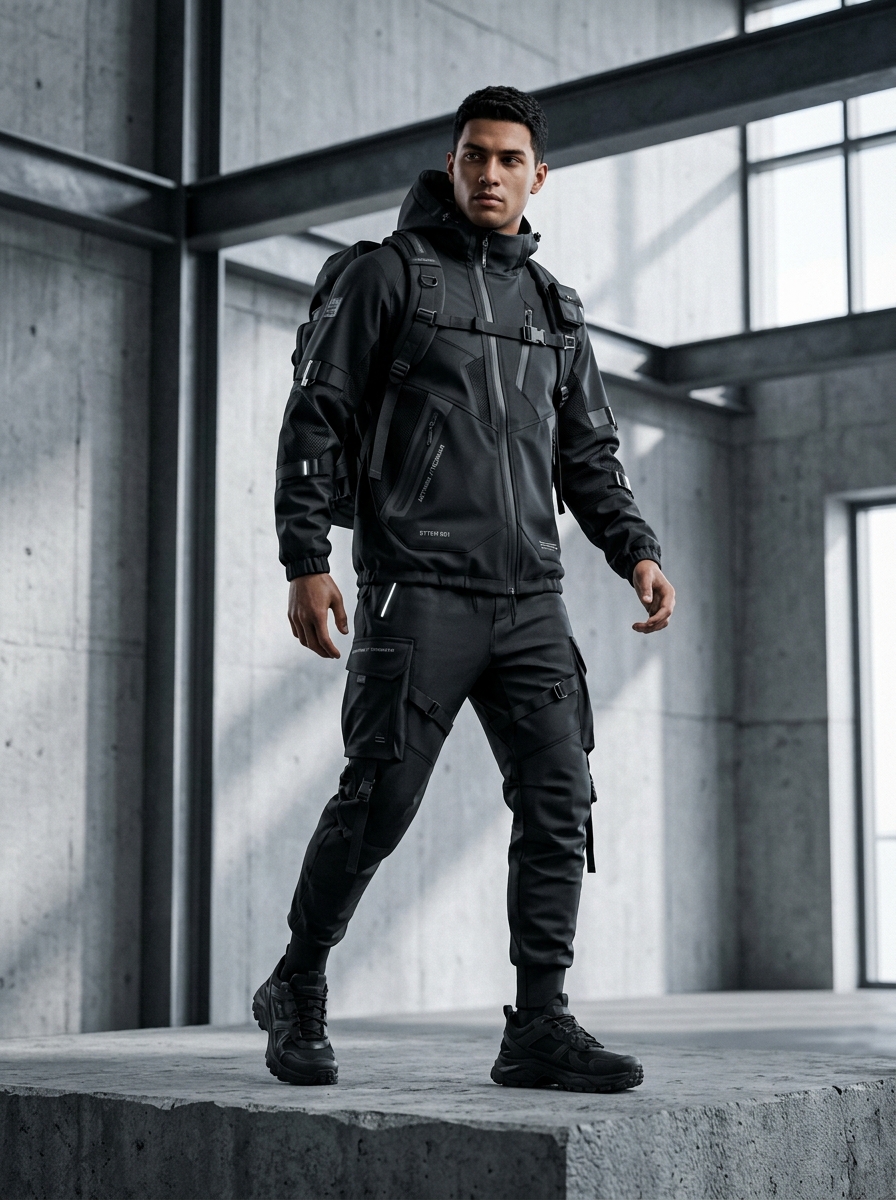
Project Overview
The goal of this project was to engineer a futuristic, modular streetwear jacket that offers high mobility while integrating custom utility attachments. The structural challenge lay in balancing a heavy, protective silhouette with lightweight material properties and ensuring that real-world seam lines would perform flawlessly under active tension.
Core Objectives
Ergonomic Drafting
Hardware Integration
BOM & Trim Dev
Production Scaling
Workflow & Process
1. Reference & Hardware Sourcing
Studying military gear, technical fabrics, and mapping attachment points for buckles and zippers.
2. Pattern Block Construction
Developing complex raglan sleeves and ergonomic knee articulations to support range of motion.
3. 3D Assembly & Stress Testing
Simulating the garment in CLO3D to verify tension maps and eliminate physical friction zones.
4. Documentation & Trim Specs
Finalizing the Bill of Materials (BOM), stitching details, and hardware placement for factory hand-off.
Design Gallery
Technical Details
Challenges & Solutions
Challenge: Sleeve Articulation Binding
Initial 3D simulations revealed excessive strain maps around the elbow joint when the avatar was posed in an active stance, indicating the stiff 3-layer fabric would restrict wearer mobility.
Solution: Dart Re-engineering
Redrafted the two-piece sleeve by introducing structural darts at the inner elbow and adding a 5% ease allowance to the outer curve. Re-simulation confirmed a 40% reduction in fabric tension during movement.
Final Outcome
- Factory-ready BOM & Trim List
- Ergonomic Pattern Layout
- Zero-Waste Virtual Sampling
- Verified Water-tight Construction
Lessons Learned
Developing technical outerwear requires a deep synergy between pattern drafting and trim specification. This project demonstrated that accurately modeling hardware weights and seam-tape rigidity in 3D is critical; failing to account for these elements digitally can result in unexpected stiffness in the physical garment.